Featured
Table of Contents
- – The Shift Towards Measurable Design Results
- – Data-Informed Strategy and AI Search Exposure
- – Case Research Study Analysis: ROI Through Ite...
- – The Role of Multi-Channel Combination
- – AEO and the Advancement of Content Style
- – Technical Performance as a Design Metric
- – Conclusion of 2026 Standards
The Shift Towards Measurable Design Results
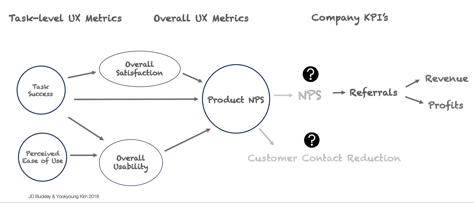
Design success in 2026 is no longer a matter of viewpoint or visual choice. Marketing executives and company owner have moved away from subjective evaluations, demanding clear evidence of how visual and structural modifications impact earnings. This shift has turned the web style process into a data-heavy discipline where every option is tested against specific performance indicators. In cities like Denver and Chicago, companies are increasingly trying to find ways to prove that their digital presence contributes to the growth of business in a quantifiable way.
Steve Morris, CEO of NEWMEDIA.COM, has frequently highlighted this trend in major market publications. He mentions that the integration of AI into search and user behavior tracking has actually made it possible to see exactly how a design iteration affects a user's decision-making procedure. For projects concentrating on CBS Television Directory Website Development, the goal is to produce an environment where data guides the creative procedure instead of following it. This technique guarantees that the end product is constructed to carry out in a competitive 2026 market.
Data-Informed Strategy and AI Search Exposure
The rise of AI search optimization (AEO) and generative engine optimization (GEO) has changed how success is measured. It is no longer sufficient to rank on the very first page of standard search results. A website should now be structured so that AI models can quickly parse and recommend its material. This is where platforms like RankOS entered into play. By using these tools, businesses can see how their web development impacts their exposure within AI-generated reactions.
Determining the effectiveness of these techniques involves looking at "search footprint" instead of simply keyword rankings. When a brand in media updates its website, the success of that upgrade is judged by how often AI agents point out the website as a primary source. This technical requirement has made the relationship in between design and SEO more intimate than ever in the past. Success in 2026 needs a website to be readable to both human eyes and machine algorithms concurrently.
Case Research Study Analysis: ROI Through Iterative Testing
Concrete examples of this data-driven technique often involve specific technical overhauls that target clear conversion goals. In a current analysis of a task within media, the focus was positioned on minimizing friction throughout the checkout procedure. By analyzing heatmaps and session recordings, the group recognized particular points where users were dropping off. These were not just technical bugs however design choices that confused the user or slowed down their progress. Many organizations now invest greatly in Web Database Design to ensure these friction points are removed before they impact the bottom line.
After implementing a series of targeted changes, the task saw a direct increase in finished deals. This wasn't an outcome of a "rebrand" in the traditional sense, however a series of calculated adjustments based on user habits information. This kind of performance-based refinement is what specifies an effective digital job in 2026. Companies in Nashville, Dallas, and Atlanta are discovering that these small, data-backed changes frequently yield a greater return than a total visual overhaul that overlooks user information.
The Role of Multi-Channel Combination
Digital success in 2026 also depends on how well a website interacts with other marketing channels. Social media marketing, PAY PER CLICK, and e-commerce are no longer different silos. They are parts of a single ecosystem that should collaborate to drive conversions. For a job utilizing a modern e-commerce stack, the design should stay consistent across every touchpoint, from an Instagram advertisement to the last confirmation page. This consistency is determined through cross-channel attribution models that show the path a consumer took before making a purchase.
The demand for Custom Web Database Design has increased as businesses realize that a fragmented digital existence leads to lost income. When a user moves from a social networks app to a mobile site, the shift should be instant and instinctive. If the design stops working to preserve this connection, the conversion rate drops. Keeping track of these transitions allows agencies to determine which channels are providing the finest ROI and which require more attention.
AEO and the Advancement of Content Style
Content style has likewise seen a significant shift. In 2026, digital content assets are established with an emphasis on "response engine" compatibility. This implies that headings, lists, and tables are developed to be quickly extracted by AI. This isn't just a technical SEO job; it is a style job. The design of the page should prioritize information in such a way that is clear and authoritative.
Steve Morris has often noted that sites failing to adapt to this "information-first" design style are rapidly losing ground. In LA, Miami, and New York City, the competitors for AI presence is strong. Businesses that focus on CBS Television Directory Website Development are seeing much better results than those that adhere to older, more chaotic style patterns. The metric for success here is "citation rate"-- how often an AI search tool utilizes a site's specific material to address a question.
Technical Performance as a Design Metric
Speed and stability are now core parts of design success. A lovely site that takes 3 seconds to load is a failure in 2026. Performance metrics like Largest Contentful Paint (LCP) and Very First Input Delay (FID) are now dealt with as design restraints. When working on web development, designers should work within a performance spending plan. This guarantees that the visual components do not compromise the site's speed or its capability to rank in search outcomes.
Success is determined by the stability of the site under high traffic and the speed at which it becomes interactive. For companies in Dallas or Nashville, where mobile usage is incredibly high, these technical metrics are frequently the most essential element in identifying the ROI of a new style. If the site is sluggish, users leave, and the marketing spend is wasted.
Conclusion of 2026 Standards
The requirement for an effective digital task has actually moved from "how it looks" to "how it carries out." By using detailed audit data, companies can prove the worth of their work with accuracy. Whether it is through improved AI search exposure via RankOS or greater conversion rates through UX testing, the focus remains on the monetary outcome. As 2026 continues to press the limits of what is possible with AI and information, the companies that embrace this scientific method to design will be the ones that see the most considerable growth. The era of thinking what users want is over; the age of knowing is here.

Table of Contents
- – The Shift Towards Measurable Design Results
- – Data-Informed Strategy and AI Search Exposure
- – Case Research Study Analysis: ROI Through Ite...
- – The Role of Multi-Channel Combination
- – AEO and the Advancement of Content Style
- – Technical Performance as a Design Metric
- – Conclusion of 2026 Standards
Latest Posts
Why Every Company Needs a Sustainability-First Web Strategy
Comparing App Efficiency Standards for Local Consumer Brands
Why Danger Modeling Is Necessary for Local Development
More
Latest Posts
Why Every Company Needs a Sustainability-First Web Strategy
Comparing App Efficiency Standards for Local Consumer Brands
Why Danger Modeling Is Necessary for Local Development